5 Essential WordPress Plugins to Automate and Scale Your Event Business
Are you tired of spending more time managing spreadsheets and manual emails than growing your event business?
Whether you’re juggling small local workshops or coordinating large-scale conferences, the secret to staying competitive isn’t just about hard work; it’s about building a smart, automated tech stack that handles the heavy lifting for you.
Right now, manual processes are the silent killers of both growth and attendee satisfaction. By leveraging the right WordPress tools, you can transform your website from a simple landing page into a high-performance business hub that works for you 24/7.
Why Do You Need Dedicated Plugins for Your Event Business?
If you’re running an event business, your website is your storefront, booking agent, and customer service representative rolled into one. Managing this manually is a recipe for burnout. Here’s why investing in the right plugin ecosystem is non-negotiable:
- Automate Mundane Tasks: From sending ticket confirmations to managing attendee lists, plugins handle the “busy work” so you can focus on strategy and creativity.
- Trust & Professionalism: When a customer books a ticket, they expect a secure, seamless checkout experience. Dedicated tools provide the professional interface needed to build that credibility instantly.
- Data-Driven Decision Making: Modern plugins track sales, attendance, and peak booking times, providing the insights you need to optimize revenue.
- Scalability: Whether you host one event a month or ten a week, the right tech stack ensures your site remains stable and efficient as your business expands.
The Essential Tech Stack
1. WpEvently: The Heart of Your Event Engine
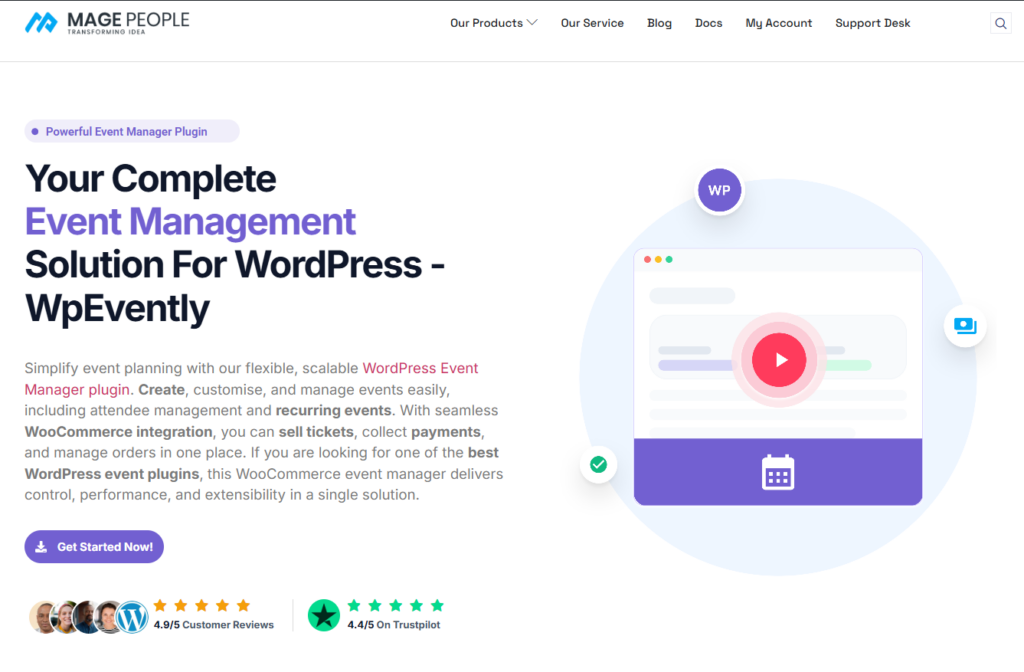
Think of WpEvently as the central command center for your events. It allows you to create, manage, and sell tickets for events of all sizes effortlessly.
- Why it works: It handles essential tasks like recurring event scheduling, custom registration forms with conditional logic, and automated email confirmations.
- Key Advantage: It is purpose-built for the WordPress/WooCommerce ecosystem, ensuring that your site remains fast and secure even as your event catalog grows.
2. WooCommerce: The Reliable Payment Foundation
No event business can scale without a secure way to collect payments. WooCommerce is the industry standard, offering a seamless checkout experience that builds instant trust with your attendees.
- Why it works: It supports global payment gateways like Stripe and PayPal, ensuring your transactions are safe and PCI-compliant.
- Key Advantage: Since it powers your store, it integrates perfectly with your other business tools, allowing you to link ticket purchases directly to your financial reporting.
3. WpDepositly: Boost Conversions with Partial Payments
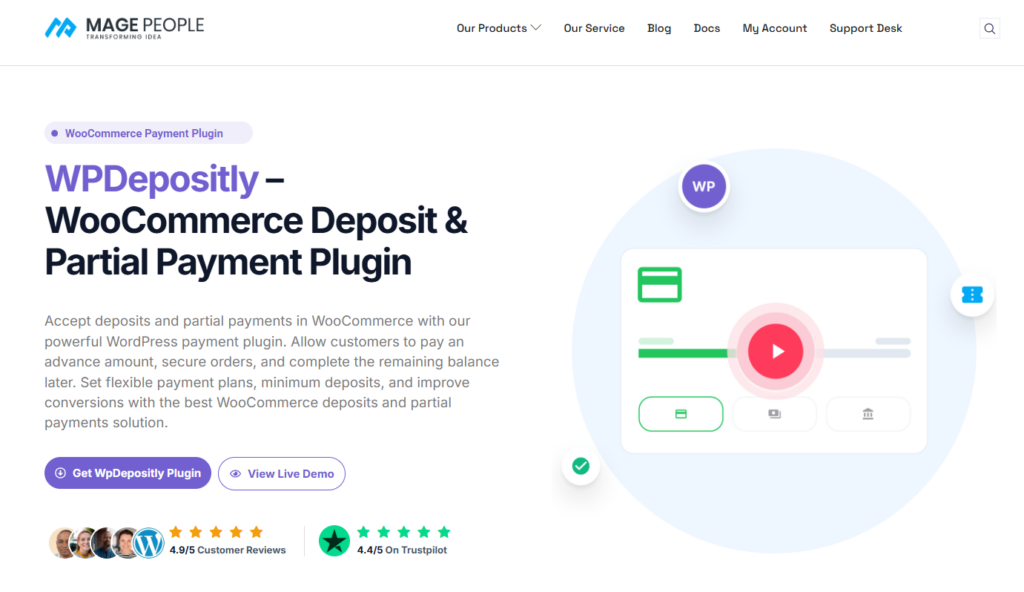
One of the biggest hurdles in selling event tickets is the “upfront cost” friction. WpDepositly solves this by allowing your customers to pay a deposit or a percentage of the total fee to secure their booking.
- Why it works: It provides flexible payment options (fixed, percentage-based, or custom) and includes automated email reminders for remaining balances.
- Key Advantage: By lowering the barrier to entry, you significantly improve your conversion rates and secure customer commitment early.
4. Eventful: Elevate Your Visuals

The event website needs to look professional to drive sales. Eventful is designed to enhance your event listings with modern, engaging layouts.
- Why it works: It offers grid, list, slider, and carousel layouts, allowing your event details to stand out without needing custom coding or complex CSS.
- Key Advantage: It is specifically optimized to integrate with event platforms, ensuring your branding stays clean and professional across all devices.
5. Zapier Integration: Your Automation Layer
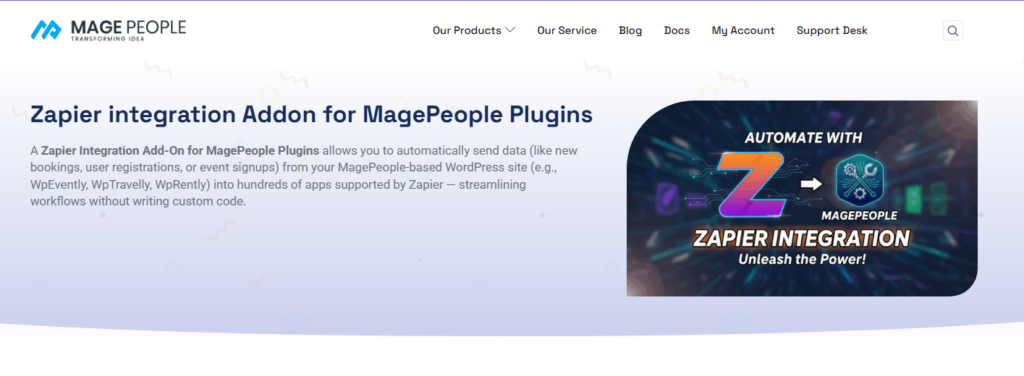
To truly scale, you need your website to “talk” to your other business tools. The Zapier Integration connects your event data to thousands of third-party apps.
- Why it works: You can automatically sync attendee data to Google Sheets, notify your team on Slack, or add new registrants to your email marketing lists.
- Key Advantage: It eliminates manual data entry, saving you hours of administrative work every week.
Industry Insight: The Power of Automation
The events industry is rapidly evolving. The global events market is projected to reach approximately $1.46 trillion by 2026. As the market expands, successful organizers are shifting from manual spreadsheets to unified tech stacks to maintain operational resilience.
- Efficiency: Automating tasks such as RSVPs and guest lists allows teams to focus on high-value creative work.
- Conversion: With the rise of mobile-first consumers, a smooth, automated booking experience is essential; industry trends show that technology-driven planning is key to remaining competitive in 2026.
- Accuracy: Automation significantly reduces human error in pricing and scheduling, ensuring a more professional experience for your attendees.
Frequently Asked Questions (FAQ)
Q: Do I need to be a developer to use these plugins?
A: Not at all! Plugins like WpEvently and Eventful are designed to be user-friendly, allowing you to manage complex tasks like ticketing and layout design without writing a single line of code.
Q: Why should I offer partial payments for my events?
A: Offering deposits reduces purchase friction. When customers can secure a spot for a smaller upfront fee, they are far more likely to complete the booking, which directly increases your revenue and conversion rates.
Q: Can these plugins work with my existing WordPress theme?
A: Yes. These tools are built with broad compatibility in mind to ensure they work seamlessly with almost all popular WordPress themes and page builders.
Q: How does Zapier help my event business specifically?
A: It creates an automated workflow. For example, when someone buys a ticket via WpEvently, Zapier can instantly add that person to your CRM, send a welcome email, and create a folder for them in your cloud storage, all automatically.